
Tata Motors was the worst performer on the Sensex, plummeting 10.32 per cent to Rs 436.55 after the company reported a steep 96.22 per cent decline in consolidated net profit for the December quarter.

The trend was visible in the early trade on Thursday as investors indulged in trimming their bets after the minutes of the US Federal Reserve's September meeting indicated a possible rate hike this year.

Among the Sensex firms, Infosys, Tech Mahindra, HCL Technologies, Tata Consultancy Services, Wipro and JSW Steel were the major gainers during the morning deals. Nestle, Bharti Airtel, Axis Bank ITC were among the laggards.

US gold futures slid over 1 per cent on Thursday, while silver futures dropped 2 per cent.

'The risk is in not being invested and missing out on an upmove.'

The FMCG index gained more than 1% on the back of stellar gains in ITC.

From the Sensex firms, Bajaj Finance, Bajaj Finserv, Infosys, Bharti Airtel, Kotak Mahindra Bank, Larsen & Toubro, Mahindra & Mahindra, ITC, Tech Mahindra, Tata Steel, Tata Motors, Titan, Reliance Industries and Nestle were the major winners. Hindustan Unilever, Power Grid, Axis Bank, Tata Consultancy Services, State Bank of India, Asian Paints and Wipro were the laggards.

tailwinds of a remarkable year and handsome investor returns, Indian equities are set for an eventful journey in 2024, with a slew of local and global cues -- varying from interest rates to Lok Sabha polls to geopolitical happenings. Analysts are of the view that the bull run in the domestic equity market will continue, and over the next 3-6 months, the benchmark indices -- Sensex and Nifty -- could climb up to 7 per cent. In 2023, the 30-share BSE Sensex jumped 11,399.52 points or 18.73 per cent, and the NSE Nifty climbed 3,626.1 points or 20 per cent.

Gold prices on Wednesday sky-rocketed by Rs 340 at Rs 11,510 per ten gram as investors directed their money to the precious metal after the dollar fell, sparked by Federal Reserve cutting key interest rates.

For one thing, US Fed Chairman Ben Bernanke was perhaps right in postponing the quantitative easing taper even though the markets had complained at that time that they were primed for some reduction in QE3 and the Fed had missed an opportunity to execute their plans without causing too much of a flutter.

The market capitalisation of BSE-listed firms reached an all-time high of Rs 299.90 lakh crore on Wednesday despite the Sensex falling marginally after a remarkable record-breaking rally in the last few trading sessions. The 30-share BSE Sensex dipped 33.01 points or 0.05 per cent to settle at 65,446.04, after rallying in the past five trading straight sessions. During the day, the benchmark hit a low of 65,256.49 and a high of 65,584.33.

The Lok Sabha elections in 2024 are not a consideration when it comes to monetary policymaking, said Reserve Bank of India governor Shaktikanta Das to underscore the central bank's commitment to controlling inflation. "It's not possible for me to comment what we do in the next MPC (Monetary Policy Committee), but one thing I can tell and I would like to make it very clear-that the fact of elections coming up in 2024 is not a factor at all so far as monetary policymaking is concerned. "Monetary policymaking is for checking (and) controlling inflation," Das said at the Business Standard, BFSI Insight Summit.

Investors still seem to have a disinflation bias to their thinking.

A weak dollar overseas also aided the rupee rise while fresh sell-off by foreign funds in domestic stocks capped the currency's gains, forex dealers said.
The US Federal Reserve, on Wednesday, announced a 0.25 per cent cut in benchmark interest rate, which is expected to increase capital flow from foreign institutional investors in the Indian stock market.
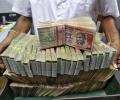
In Singapore, oil prices eased in Asian trade today on a mixed US inventory report indicating tepid demand, while expectations of a return of Libyan supplies also weighed, analysts said.

The partially convertible rupee closed at 61.45/46 per dollar, weaker from Wednesday's 61.35/36.

'Valuations of midcaps and smallcaps have reached very high levels, and hence to that extent leave little margin of safety.'

'The main worry is lots of new investors coming into the markets in order to make a quick buck/easy money.' 'Those things are happening again and have happened in the past as well.' 'All that has led to problems.' 'We are not there yet, but will get there eventually.'

Among the Sensex firms, Tech Mahindra, HCL Technologies, Wipro, Infosys, Bajaj Finance, Tata Consultancy Services, Bajaj Finserv and ICICI Bank were the major gainers. Power Grid, Nestle, Asian Paints and Hindustan Unilever were among the laggards.

Market participants attribute the stability to the Reserve Bank of India's timely intervention in the foreign exchange market, both in terms of selling and buying dollars.

With the Nifty50 just about 3 per cent away from its all-time closing high of 18,812 points, analysts at BofA Securities suggest investors book profit. Their reasons for the advice include risks like the possibility of a cut in corporate earnings growth forecasts, high valuation (one-year forward P/E of 19.5x), interest rates staying elevated for longer-than-expected and credit tightening. Going ahead, they expect the Nifty50 index to drop to 16,000 levels - down nearly 12 per cent from the current level of 18,255 points, which they believe would be a good time to buy.

Equity indices chalked up losses for the second straight session on Monday, in tandem with a bearish trend overseas as ratcheting up of hostilities in Ukraine and prospects of further rate hikes by the US Fed soured global risk sentiment. The rupee slipping to another all-time low against the US dollar amid foreign fund outflows added to the gloom, traders said. After tumbling over 800 points in intra-day trade, the 30-share BSE Sensex clawed back some lost ground to end 200.18 points or 0.34 per cent lower at 57,991.11.

PowerGrid was the top laggard in the Sensex pack, shedding around 2 per cent, followed by IndusInd Bank, Reliance, L&T, UltraTech Cement and Bajaj Finance.

The demand for gold is expected to take a hit if the price of the yellow metal - which has been hovering around Rs 60,000, a level never seen before - remains elevated. Due to a sharp increase in price in a very short time and the flow of smuggled gold continuing, gold price in Mumbai is quoted at around Rs 59,000 per 10 gram. Typically, overall demand in the January-March and July-September quarters is moderate-to-dull, which is the case in the ongoing period.

Investors booked profit ahead of the outcome of the two-day US Fed policy meet which begins today.

Nearly 40 per cent of IITians sitting for placements in 2024 are yet to receive job offers, showing a doubling of the 'unplaced' in the last three years from 19 per cent in 2021-2022 to 38 per cent in 2023-2024.

'We are not entirely out of the woods.' 'The broader trajectory remains tentative.' 'However, we may expect some near-term bounce.'

Tata Motors was the biggest gainer in the Sensex pack, rallying 2.94 per cent. It was followed by Vedanta, Bajaj Finance, Sun Pharma, ONGC, ICICI Bank, Bajaj Auto, Tata Steel, RIL, HDFC duo, L&T and SBI, rising up to 2.78 per cent.

The Fed's decision on tapering its monthly $85 billion bond-buying programme is expected later on Wednesday.

India may adopt norms similar to the US Federal Reserve model, which regulates conglomerate-led banks in the country.

The Indian equity market is likely to remain under pressure and rangebound over the next few months. This comes as global central banks, led by the US Federal Reserve look at a possibility of hiking rates aggressively to tame inflation. Back home, the Reserve Bank of India, too, remains data dependent in its endeavour to keep inflation in check and pursue an aggressive monetary policy stance.

Equity benchmark indices Sensex and Nifty stayed on the back foot for the second straight session on Friday as investors offloaded FMCG, IT and teck stocks amid a weak opening in European markets. Selling pressure in index heavyweight Reliance Industries also added to the weak trend in equities. The 30-share BSE Sensex fell 223.01 points or 0.35 per cent to settle at 62,625.63.

Global trends, trading activity of foreign investors and movement of oil benchmark Brent crude would dictate terms in the domestic markets this week, analysts said. Equity markets, which fell nearly 3 per cent last week, may face volatile trends amid the monthly derivatives expiry on Thursday. "This week marks the September month Futures and Options (F&O) expiry, which is expected to bring about volatility in the market," said Santosh Meena, Head of Research, Swastika Investmart Ltd.
Investors' wealth fell by Rs 2.39 lakh crore on Monday in line with a weak trend in the global equity markets. The BSE Sensex tanked 861.25 points or 1.46 per cent to settle at 57,972.62. During the day, it tumbled 1,466.4 points or 2.49 per cent to 57,367.47.

Benchmark indices finished on a weak note on Thursday, extending their previous day's decline amid a negative trend in global equity markets after the US Fed hiked interest rates by 75 basis points. The 30-share BSE Sensex declined 69.68 points or 0.11 per cent to settle at 60,836.41. During the day, it tanked 420.95 points or 0.69 per cent to 60,485.14.
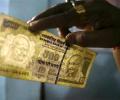
On Monday, the rupee gained 16 paise.

'Investors with higher risk appetite and longer horizon (more than one year) can invest in longer-duration funds like corporate bond funds, long-duration funds and gilt funds for maximum gain.'

Kotak Mahindra Bank was the biggest loser from the Sensex pack, skidding 1.83 per cent, followed by Axis Bank, NTPC, Hindustan Unilever, ICICI Bank, Bharti Airtel, Reliance Industries, HCL Technologies, IndusInd Bank and Nestle. In contrast, Bajaj Finance, Bajaj Finserv, Tech Mahindra, Tata Consultancy Services, Titan, Infosys, HDFC Bank, HDFC and ITC were the gainers.

Yellen is currently Vice Chairman of the Board of Governors of the Federal Reserve System.
